Straumann implants cost €700–€1,300 all-inclusive in Turkey vs €2,500–€4,500 in Germany or the Netherlands.

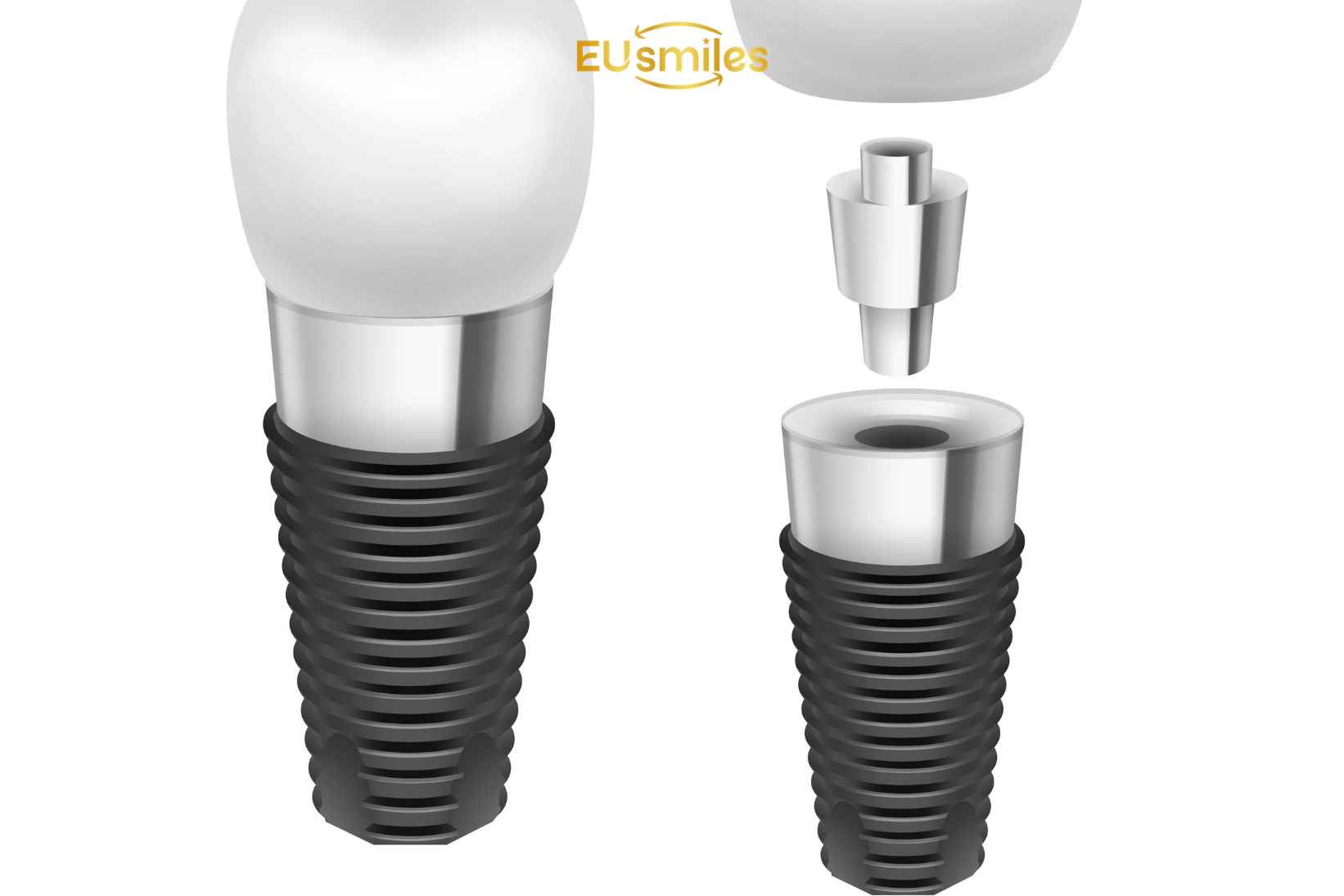
Straumann Implants Price: Turkey vs Europe — Complete 2026 Guide
Last updated: March 2026 | Reading time: ~12 minutes
✅ Quick Answer: A complete Straumann implant restoration — fixture, abutment, zirconia crown, CBCT scan, and surgical fee — costs €700–€1,300 all-inclusive in Turkey, compared to €2,500–€4,500 in Germany and €2,200–€3,800 in the Netherlands. The implant is the identical Swiss-manufactured Straumann component. The price difference is entirely structural — lower clinic overheads, in-house laboratories, and higher surgical volume in Turkey — not a difference in the implant itself or the clinical protocol.
Straumann has been the gold standard in implant dentistry since 1954. Its Roxolid titanium-zirconium alloy, SLActive surface technology, and precisely engineered BLX, BLC, TLX, and TLC implant systems represent the most extensively researched tooth replacement components in the world. When patients from across Europe consider travelling to Turkey for dental implants, Straumann is — by a significant margin — the most frequently requested brand.
This guide gives you exactly what you need to make a fully informed decision: EUR-denominated prices by country, a clear breakdown of the Straumann product range, an honest explanation of why prices differ so dramatically between Turkey and Western Europe, a step-by-step guide to verifying implant authenticity, and a comprehensive clinic selection checklist.
📋 What This Guide Covers: EUR price table: Turkey vs 9 European countries · Why the same Straumann implant costs less in Turkey · The complete Straumann product range explained (BLX, BLC, TLX, TLC, SLActive, Roxolid, PURE) · BLX vs BLC: which system for your case · Total cost breakdown (not just the fixture) · How to verify genuine Straumann (Passport, lot number, packaging) · Straumann vs Nobel Biocare · Two-trip timeline · Clinic selection checklist · FAQ
Same Swiss Implant, Lower Price: The Structural Explanation
The single most important question patients ask is whether a Straumann implant placed in Turkey is the same product as one placed in Munich or Amsterdam. The answer is unambiguously yes — and understanding why the price differs so dramatically requires a brief look at the economics of dental treatment.
The implant fixture has a fixed global manufacturing cost. Straumann’s Roxolid alloy is produced in Basel, Switzerland, to ISO 13485 and CE standards. The identical component — same alloy, same SLActive surface treatment, same product code — is distributed globally through Straumann’s authorised distributor network. A BLX SLActive Roxolid implant placed in Antalya comes from the same production line as one placed in Frankfurt.
Clinic overheads in Turkey are dramatically lower. In Germany or the Netherlands, a dental implantologist’s annual salary, city-centre clinic rent, liability insurance premiums, staff costs, and regulatory compliance overheads must all be factored into treatment pricing. These costs alone push the minimum viable price for a complete implant restoration well above €2,000. In Turkey, the same overheads represent a small fraction of Western European equivalents — and the difference is passed directly to the patient.
In-house laboratories eliminate a major cost layer. In Western Europe, crown fabrication is almost universally outsourced to third-party dental laboratories. A zirconia crown that an Istanbul in-house lab produces for €200–€400 using identical Ivoclar materials and CAD/CAM digital manufacturing processes costs €800–€1,500 when outsourced in Germany, and £1,200–€2,500 when outsourced in London. The material and process are identical; the cost structure is entirely different.
High patient volume creates operational efficiency. Turkey’s leading implant centres treat hundreds of international patients per month. At this volume, clinics negotiate direct supply agreements with Straumann’s authorised Turkish distributors at rates unavailable to smaller European operators. Their implantologists perform procedures at a frequency that builds surgical precision rarely achievable in lower-volume Western practices.
Government-supported dental tourism infrastructure. Turkey’s government actively funds and promotes dental tourism as a strategic economic sector. This includes subsidised training programmes for implantologists, investment in internationally accredited clinic infrastructure, and Ministry of Health oversight specifically designed to protect international patients — further reducing the structural cost base.
💡 The verified conclusion: You receive the identical Swiss-manufactured Straumann implant in Turkey. Every structural factor driving the price difference — labour, rent, lab costs, insurance — is lower in Turkey. None of these factors affects the quality, clinical protocol, or long-term performance of the implant itself.
Straumann Implant Price: Turkey vs Europe 2026 — EUR Comparison Table
All prices below are in euros and represent the total all-inclusive cost (fixture + abutment + zirconia crown + CBCT scan + surgical fee). Single arch prices for All-on-X are per jaw.
| Country | Single Implant (all-in) | All-on-4 Straumann (per arch) | All-on-6 Straumann (per arch) | Fixture Only (est.) | Saving vs Turkey |
|---|---|---|---|---|---|
| 🇹🇷 Turkey | €700–€1,300 | €3,500–€6,000 | €4,500–€7,500 | €280–€600 | Baseline |
| 🇩🇪 Germany | €2,500–€4,500 | €14,000–€28,000 | €22,000–€40,000 | €700–€1,200 | Up to €3,200 |
| 🇳🇱 Netherlands | €2,200–€3,800 | €12,000–€24,000 | €18,000–€36,000 | €600–€1,000 | Up to €2,500 |
| 🇨🇭 Switzerland | €3,000–€5,500 | €18,000–€36,000 | €26,000–€50,000 | €900–€1,500 | Up to €4,200 |
| 🇬🇧 United Kingdom | €2,600–€4,200 | €14,000–€26,000 | €20,000–€38,000 | €700–€1,100 | Up to €2,900 |
| 🇸🇪 Sweden | €2,400–€4,000 | €12,000–€22,000 | €18,000–€36,000 | €650–€1,000 | Up to €2,700 |
| 🇫🇮 Finland | €2,200–€3,800 | €12,000–€24,000 | €18,000–€36,000 | €600–€1,000 | Up to €2,500 |
| 🇦🇹 Austria | €2,300–€4,000 | €13,000–€25,000 | €20,000–€38,000 | €650–€1,050 | Up to €2,700 |
| 🇧🇪 Belgium | €2,400–€4,200 | €13,000–€26,000 | €20,000–€38,000 | €650–€1,050 | Up to €2,900 |
| 🇪🇪 Estonia | €1,800–€3,200 | €10,000–€20,000 | €15,000–€28,000 | €500–€900 | Up to €1,900 |
| 🇵🇱 Poland | €900–€1,600 | €5,000–€9,000 | €7,000–€13,000 | €300–€700 | €200–€1,300 |
⚠️ Critical Note on Pricing: Many European clinics advertise the fixture-only price — the bare titanium screw — which excludes the abutment, crown, CBCT scan, and surgical fee. In Turkey, reputable all-inclusive packages genuinely cover every component. Always request an itemised total price including fixture + abutment + crown + scan + surgical fee before comparing quotes from any country.
Total Cost Breakdown: What You Are Paying For
A complete Straumann implant restoration involves five distinct cost components. Here is what each covers and what it costs in Turkey versus Germany:
| Component | What It Is | Turkey (EUR) | Germany (EUR) |
|---|---|---|---|
| 3D CBCT Scan | Cone beam CT — essential for safe implant planning; maps bone density, width, and nerve positions | Included in package | €200–€500 (separate fee) |
| Straumann Implant Fixture | The Swiss-made titanium screw placed into the jawbone — the implant itself | €280–€600 (BLC/BLX/TLX) | €700–€1,200 |
| Abutment | The connector piece attaching the fixture to the crown — original Straumann component | €80–€200 | €300–€600 |
| Zirconia Crown (in-house lab) | The visible tooth — fabricated digitally with CAD/CAM from Ivoclar materials | €200–€400 | €800–€1,500 (outsourced lab) |
| Surgical Fee + Anaesthesia | Implantologist’s surgical time, sterile equipment, local anaesthetic, nursing team | Included in package | €400–€800 (separate) |
| Hotel + Transfers (both trips) | 5-star accommodation and private airport-to-clinic transfers — for both trips combined | Often included in package | N/A |
| TOTAL (complete, all-in) | Every component included | €700–€1,300 | €2,400–€4,600+ |
The Straumann Product Range Explained
Straumann’s product range is more nuanced than many clinics explain. Understanding the differences helps you select the right system and have an informed conversation with your surgeon.
Surface Technology: SLA® vs SLActive®
| Feature | SLA® (Standard) | SLActive® (Advanced) |
|---|---|---|
| Surface creation | Sandblasted with corundum particles + acid-etched — creates micro and macro roughness for cell attachment | Chemically modified hydrophilic version of SLA — stored in isotonic saline to preserve surface reactivity; prevents carbon contamination |
| Biological mechanism | Promotes osteoblast attachment through surface roughness; proven in 25+ years of clinical data | Actively attracts blood cells on contact; enhances fibrin network formation; accelerates the earliest phase of osseointegration by up to 40% |
| Standard healing time | 8–12 weeks before loading | 3–6 weeks before loading (early/immediate loading protocols possible) |
| High-risk patients | Standard indication — healthy patients with good bone | Preferred for smokers, diabetics, osteoporosis patients, or compromised bone — 100% survival rate in clinical studies even in these groups |
| Turkey price premium | Standard — no premium | Approx. €100–€200 per implant above SLA |
Material: Standard Titanium (Ti Grade 4) vs Roxolid® (TiZr Alloy)
Standard Titanium (Grade 4): The original implant material. Biocompatible, proven over 60+ years. Available in diameters from 3.3mm upwards. Excellent long-term data. Suitable for the majority of standard cases.
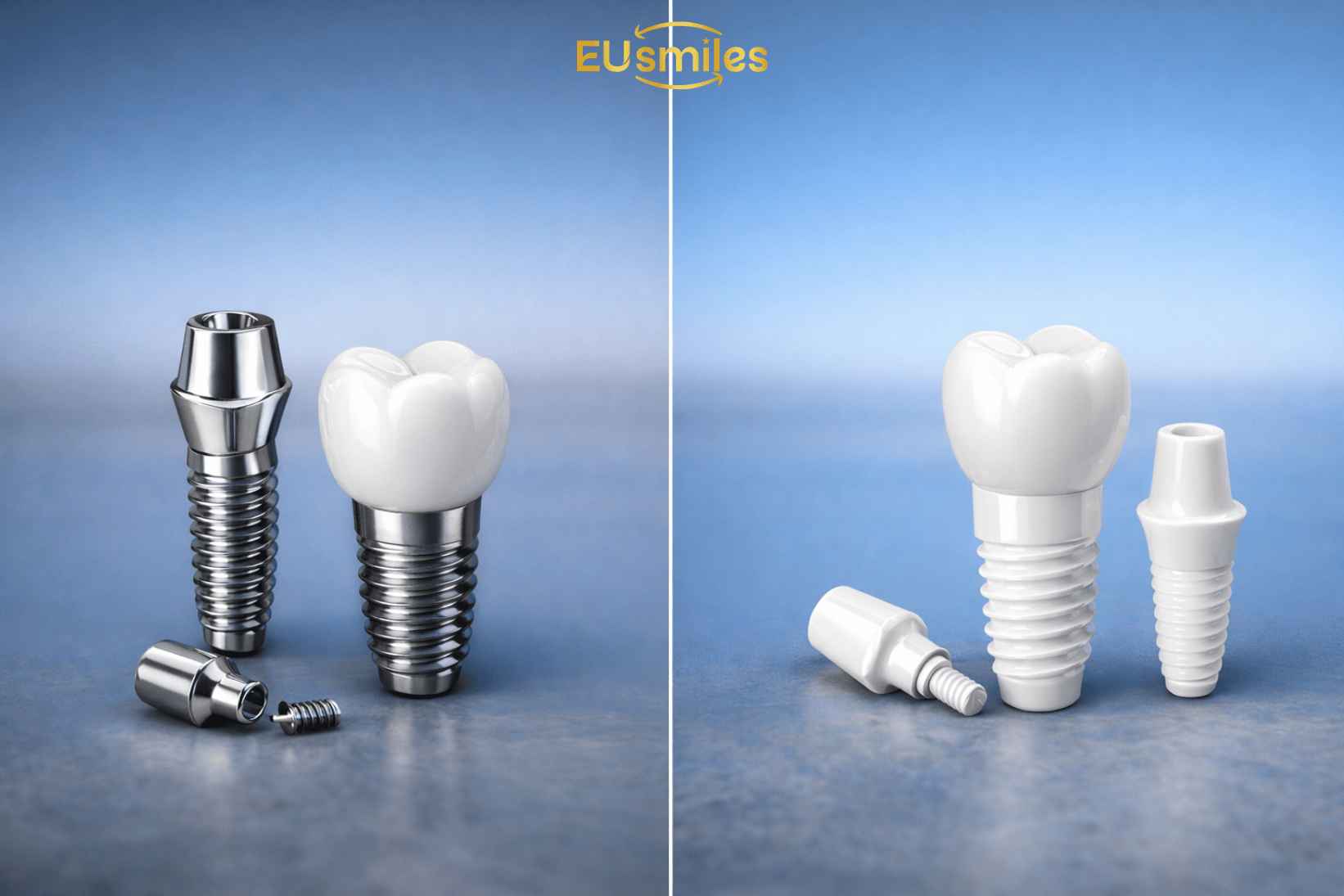
Roxolid® (Titanium-Zirconium, ~85% Ti / ~15% Zr): Straumann’s proprietary alloy with approximately 50% higher tensile strength than pure titanium. This increased strength allows use of narrower-diameter implants (from 2.9mm) in areas with limited bone width — avoiding bone grafts in some cases. Particularly valuable in the aesthetic front zone where bone width is often limited. Roxolid narrows are frequently the reason a patient can receive an implant without a bone graft at all.
Implant Design Systems: BLX, BLC, TLX, TLC
| System | Design | Key Clinical Advantage | Best Use Case | Turkey Fixture Price (est.) |
|---|---|---|---|---|
| BLX | Bone Level Tapered | Self-cutting taper provides high primary stability in any bone type — including soft D3/D4 bone; ideal for immediate loading same day as extraction | Immediate loading; aesthetic zone; post-extraction sites; soft bone | €350–€600 |
| BLC | Bone Level Cylindrical | Classic bone-level design; excellent marginal bone preservation; broadest prosthetic component range; most extensively studied system in the Straumann portfolio | Standard replacement cases; good bone quality; broadest prosthetic options | €300–€550 |
| TLX | Tissue Level Tapered | Tissue-level connection minimises peri-implant tissue manipulation; one-stage surgery possible without second surgical procedure; proven in thin soft tissue cases | One-stage protocols; thin soft tissue; premolar/molar regions; simplified workflow | €320–€570 |
| TLC | Tissue Level Cylindrical | The original Straumann design — 70 years of continuous clinical data; tissue-level connection reduces need for complex prosthetic components; straightforward protocol | Posterior teeth; patients seeking maximum clinical evidence base; simplified restorative protocol | €280–€500 |
| PURE Ceramic | Zirconia (metal-free) | Completely metal-free; ideal for metal allergy or patients prioritising aesthetic tissue response; ivory colour eliminates grey shadow at gum line | Metal allergy; visible anterior zone; aesthetic priority patients | €500–€900 |
💡 Which Straumann system for Turkey patients? For most single-tooth cases, BLX with SLActive surface and Roxolid material is the current recommendation — highest primary stability, fastest healing, and narrowest available diameter. For full-arch All-on-X restorations, both BLX and BLC are widely used in Turkish implant centres. Your CBCT scan data will determine which system your surgeon recommends for your specific bone anatomy.
BLX vs BLC: Which System Is Right for Your Case?
This is one of the most common questions patients ask when requesting Straumann implants — and one that many clinic websites answer superficially. Here is a clinically grounded comparison:
| Clinical Factor | Choose BLX | Choose BLC |
|---|---|---|
| Bone quality | Soft bone (D3, D4) — taper provides superior primary stability | Good to excellent bone (D1, D2) — cylindrical design optimal |
| Timing | Immediate placement (same day as extraction) or immediate loading (crown same day) | Delayed placement after healing; standard 8–12 week osseointegration |
| Location in mouth | Anterior aesthetic zone (front teeth) — narrow diameter options available | Posterior region (molars/premolars) — cylindrical under high load |
| Bone width | Narrow ridges — Roxolid narrows from 2.9mm diameter | Standard bone width — 3.3mm and above |
| Treatment timeline | Faster — SLActive enables earlier loading; potentially one trip for both surgery and crown | Standard — 8–12 weeks healing before second trip |
| Price | Slightly higher — €350–€600 fixture | Standard — €300–€550 fixture |
📌 Clinical Note: The choice between BLX and BLC should always be made by your implantologist after reviewing your CBCT scan data. For a patient with good D2 bone quality and no need for immediate loading, BLC is entirely appropriate and well-evidenced. For post-extraction sites or soft bone, BLX provides a meaningful clinical advantage. Never accept a treatment plan that doesn’t specify which system will be used and why.
Straumann vs Nobel Biocare: Which to Choose in Turkey?
Both brands are Swiss/Swedish, both have 97%+ ten-year survival rates, and both are available at accredited Turkish clinics. Here is the data-backed comparison for European patients:
| Feature | Straumann | Nobel Biocare |
|---|---|---|
| Founded / HQ | 1954 / Basel, Switzerland | 1952 / Zürich (Swedish research origins) |
| Surface tech | SLActive® — hydrophilic; fastest osseointegration (3–6 week loading possible) | TiUnite® — oxidised titanium; excellent primary stability particularly in soft bone |
| Material advantage | Roxolid® TiZr — 50% stronger; enables 2.9mm narrow implants without grafts | TiZr option available but Roxolid-equivalent range smaller |
| Full-arch (All-on-X) | Excellent — BLX widely used; strong immediate loading data | Strongest All-on-4 protocol data — Nobel invented the All-on-4 concept; most published full-arch clinical data |
| Single tooth / aesthetic zone | Preferred — Roxolid narrows ideal for thin anterior ridges; BLX taper for post-extraction sites | Good — but fewer narrow diameter options than Straumann Roxolid |
| 10-year survival rate | 97–99% (published multi-centre studies) | 97–98% (published multi-centre studies) |
| Turkey fixture price | €280–€600 depending on system | €260–€580 depending on system |
| European serviceability | Excellent — standardised global component catalogue; any European implantologist can source replacement parts | Excellent — Nobel components globally available; similarly comprehensive distribution |
📌 Verdict: For single-tooth and aesthetic zone cases, Straumann’s Roxolid narrow implants and BLX taper design provide a genuine clinical advantage. For full-arch All-on-X restorations, both brands perform equivalently at 10 years — Nobel Biocare has a slightly deeper evidence base specifically for the All-on-4 protocol it originated, while Straumann BLX immediate loading data is increasingly strong. Your surgeon’s experience with the chosen brand matters more than the brand itself.
How to Verify Your Turkish Clinic Is Using Genuine Straumann Implants
This is a legitimate concern. The premium dental tourism market has documented cases where patients were charged for premium brands and received lower-grade components. Here is a complete, step-by-step verification protocol:
Before Surgery: Get It in Writing
- Request written pre-treatment confirmation of the exact Straumann product: system name (e.g. BLX), surface (SLActive), material (Roxolid), diameter (e.g. 4.1mm), and length (e.g. 10mm). Reputable clinics provide this without hesitation.
- Ask the clinic whether they are an authorised Straumann distributor — or which authorised Turkish Straumann distributor supplies them. Straumann’s official Turkish distributor is publicly listed.
- Verify the clinic’s accreditation (Ministry of Health Health Tourism authorisation, ISO 9001, AACI or JCI) — accredited clinics are subject to audit and cannot routinely substitute products.
On the Day of Surgery: Verify the Packaging
- Before your surgeon opens the implant packaging, ask to see it. Genuine Straumann implants are supplied in sealed, sterile single-use packaging with a clear product label.
- The packaging will show: the Straumann logo, product name (e.g. ‘Straumann BLX SLActive Roxolid’), diameter and length, a CE mark, a Swiss flag, and a unique batch/lot number.
- Take a clear photograph of the packaging — this gives you the full product reference and lot number for your permanent records.
- Ask the clinic to give you the implant batch sticker (a small peel-off label from the packaging). Reputable clinics routinely add this to your patient file as standard clinical documentation.
After Treatment: Use the Straumann Passport
- Every genuine Straumann implant has a unique Straumann Digital Passport — a QR-code-based verification system accessible via the Straumann website or the myStraumann patient app.
- Using the lot number and product code from the packaging photograph, you can verify the implant’s authenticity, confirm its specifications, and register it for Straumann’s global warranty programme.
- Store your Straumann Digital Passport documentation permanently — this is the document that allows any European dentist to identify, service, and maintain your implant in 10 or 20 years.
💡 At Accredited Clinics: Clinics holding Ministry of Health Health Tourism authorisation and international accreditation (ISO 9001, AACI, JCI) provide implant batch documentation as standard — it is part of the required clinical file. The entire verification process above takes under 5 minutes and should be welcomed, not resisted, by any clinic you should consider.
Two-Trip Treatment Timeline for Straumann Implants in Turkey
| Phase | What Happens | Duration |
|---|---|---|
| Online Consultation | Share X-rays or photos; receive personalised Straumann system recommendation (BLX vs BLC; SLA vs SLActive; Ti vs Roxolid); itemised EUR quote | Before travel — free |
| First Trip — Surgery | Arrival; 3D CBCT scan; treatment plan confirmation; Straumann fixture placement under local anaesthetic; packaging verification; temporary crown or healing abutment fitted; post-surgical check before departure | 5–7 days in Turkey |
| Osseointegration | Titanium fuses with jawbone at home. SLActive: 3–6 weeks (early loading) or up to 12 weeks (conventional). Standard SLA: 8–12 weeks. Clinic remains contactable throughout. | 6–16 weeks at home |
| Second Trip — Crown | Osseointegration confirmed via X-ray; abutment placed; precision digital scan taken; zirconia crown fabricated in-house (2–3 days); trial fitting; final bonding; guarantee documentation issued | 3–5 days in Turkey |
| Long-term Maintenance | Annual X-rays and hygienist visits at home-country dentist. Share Straumann Digital Passport and implant documentation at first visit. Straumann components globally serviceable. | Ongoing — 6–12 monthly |
💡 SLActive Timing Advantage: In cases where CBCT confirms excellent primary stability (ISQ ≥70), SLActive’s accelerated osseointegration can reduce the interval between implant placement and crown fitting to as little as 3–4 weeks — potentially enabling both trips within 6 to 8 weeks. Ask your implantologist whether your bone assessment qualifies for an early loading protocol.
Clinic Selection Checklist: Straumann Implants in Turkey
✅ Non-Negotiable Requirements
- Ministry of Health (Republic of Turkey) Health Tourism Authorisation — current certificate visible on website or provided on request
- International accreditation: ISO 9001, AACI (American Accreditation Commission International), or JCI
- Named implantologist with verifiable ITI or EAO membership — Straumann’s surgical protocols are optimised for ITI-trained surgeons
- Written pre-treatment confirmation of exact Straumann system, surface, material, diameter, and length
- Implicit agreement to show implant packaging before surgery and provide batch documentation
- 3D CBCT scan included and reviewed before treatment planning — panoramic X-ray alone is insufficient for safe implant placement
- In-house dental laboratory with CAD/CAM digital milling — guarantees crown quality and speed
- Minimum 200 verified independent reviews on Google / Trustpilot — specifically mentioning implant treatment
- Written guarantee: typically lifetime on fixture, 5–10 years on crown, with clear terms for international patients
Essential Questions Before Booking
- Which exact Straumann system, surface technology, and material will you use — and can you confirm this in writing before I pay a deposit?
- Will you show me the implant packaging before surgery and provide the batch number documentation / Straumann Digital Passport?
- Is the 3D CBCT scan included in the quoted price?
- Does the package cover both trips — surgery and crown fitting?
- What is your implantologist’s ITI or EAO membership status?
- What is your aftercare protocol for patients returning to Europe, and what is covered under your guarantee?
⚠️ Red Flags — Do Not Proceed If: The clinic cannot confirm the exact Straumann product in writing. · Refuses to show implant packaging before surgery. · No CBCT scan included before treatment planning. · Cannot name the implantologist or provide their qualifications. · No in-house laboratory — crown outsourced with no quality oversight. · Pressure to pay a deposit before receiving a written itemised treatment plan.
30-Year Value: Why Straumann Is the Right Long-Term Investment
| Restoration Option | Initial Cost (Turkey/Europe) | Replacement Cycle | Est. 30-year Total Cost |
|---|---|---|---|
| Straumann Implant in Turkey | €700–€1,300 | Fixture: lifetime. Crown: 15–25 years if zirconia | €1,000–€2,000 total |
| Straumann Implant in Germany | €2,500–€4,500 | Fixture: lifetime. Crown: 15–25 years | €3,500–€6,500 total |
| Economy Implant (budget brand) | €400–€900 | Higher failure risk (5–10% within 5 years); potential replacement at year 5–10 | €800–€3,000+ if failure/replacement |
| Dental Bridge (3-unit) | €800–€2,500 | Replacement every 7–12 years; adjacent teeth ground down | €3,000–€9,000+ with replacements |
| Removable Partial Denture | €500–€1,500 | Replacement every 5–8 years; accelerates bone loss | €2,000–€6,000+ with replacements + bone loss consequences |
The 30-year comparison makes the financial logic clear: a Straumann implant placed in Turkey combines the lowest initial investment with the longest-term durability. The fixture itself — carrying the 97–99% 10-year survival rate and lifetime manufacturer backing — will very likely outlast every alternative. The crown may need eventual replacement after 15–25 years, but that is a routine, affordable procedure. Economy implants carry a meaningfully higher failure risk that erodes the initial cost saving. Bridges and dentures require repeated replacement and do not preserve bone.
Summary: Straumann Implants in Turkey — The Rational Choice
For European patients seeking Straumann dental implants, Turkey provides a clear and rational financial advantage: 60–70% lower all-inclusive costs for the identical Swiss-manufactured implant, placed by ITI-trained implantologists at internationally accredited facilities, using the same clinical protocols as the best European centres.
The key to realising this advantage safely is informed clinic selection. Verify Ministry of Health authorisation, confirm the exact Straumann system in writing before booking, insist on seeing the implant packaging before surgery, register your Straumann Digital Passport, and obtain complete documentation for your home-country dentist. Follow this process and your Straumann implant in Turkey will deliver the same 97–99% 10-year survival rate documented in Straumann’s global clinical data.
The financial case over 30 years is compelling: a Straumann implant placed in Turkey combines the lowest initial cost with the highest long-term durability of any tooth replacement option available — and the implant’s global component standardisation means any European dentist can maintain it for decades to come.
Frequently Asked Questions
Is the Straumann implant placed in Turkey the same as in Germany or Switzerland?
Yes. Straumann manufactures its implants to a single global standard at its Swiss production facilities. A BLX SLActive Roxolid implant placed in Antalya or Istanbul is produced to the same specification, from the same alloy, with the same surface treatment as one placed in Munich or Zurich. The product code and batch number are fully traceable on Straumann’s global verification system. The price difference is entirely structural — lower clinical overheads in Turkey — not a difference in the product.
How do I confirm my Turkish clinic actually used a genuine Straumann implant?
Before surgery, ask to see the sealed Straumann implant packaging. Genuine packaging shows the Straumann logo, full product name (e.g. BLX SLActive Roxolid 4.1mm × 10mm), a CE mark, Swiss origin, and a unique batch/lot number. Photograph it, ask for the batch sticker, and use the lot number after treatment to verify authenticity and register the implant via Straumann’s Digital Passport programme at the Straumann website or myStraumann app.
What is the difference between SLA and SLActive — is SLActive worth the extra cost?
SLA is Straumann’s original sandblasted, acid-etched surface — proven over 25 years with excellent osseointegration data. SLActive is a hydrophilic version that actively attracts blood cells on contact, accelerating the earliest phase of bone bonding by up to 40% and enabling earlier loading (3–6 weeks versus 8–12 weeks for standard SLA). For patients travelling from Europe, the reduced time between surgery and crown fitting — and the superior performance in compromised bone — makes SLActive worth the modest premium of approximately €100–€200 per implant.
Can a European dentist service my Straumann implant placed in Turkey?
Yes — this is one of Straumann’s key advantages over lesser-known brands. Straumann components (abutments, screws, impression copings, healing caps) are globally standardised and available from Straumann’s authorised distributor network in every European country. Any qualified implantologist in Germany, Finland, Estonia, or anywhere in Europe can order the correct replacement component using your implant’s product code and diameter. This is why brand selection matters for long-term serviceability.
Does Straumann's warranty apply to implants placed in Turkey?
Straumann’s product warranty covers manufacturing defects in the implant component and is not voided by geography — the implant is the same product regardless of where it is placed. The clinical guarantee (covering implant failure due to clinical factors such as osseointegration failure) is provided by the clinic, not Straumann directly. Confirm your Turkish clinic’s guarantee terms in writing — most accredited clinics offer a lifetime guarantee on the fixture and 5–10 years on the crown.
How many trips to Turkey are required for Straumann implants?
Two trips are required for standard cases. The first trip (5–7 days) covers the CBCT scan, consultation, implant surgery, and post-surgical check. You then return home for 3–6 months while osseointegration occurs (3–6 weeks with SLActive in appropriate cases). The second trip (3–5 days) covers abutment placement, crown fabrication, trial fitting, and final bonding. Both trips are typically included in the all-inclusive package price.
Is Straumann BLX better than BLC for Turkey patients?
BLX’s self-cutting taper design provides superior primary stability in soft bone (D3, D4) and makes it the preferred choice for immediate loading protocols — placing a temporary crown on the same day as implant surgery. For patients with good D1 or D2 bone quality seeking standard loading, BLC is entirely appropriate and has the most extensive evidence base in the Straumann portfolio. The choice should be made by your implantologist after reviewing your CBCT scan data.
You May Also Like
Zirconia vs Porcelain Crowns: What Latvians Should Choose
Why Latvian Patients Prefer Dental Treatment in Turkey
Why Antalya Is Popular Among Latvian Dental Tourists
Veneers in Turkey: A Guide for Latvian Patients
Smile Makeover Options in Turkey for Latvian Patients
Is Turkey a Safe Destination for Dental Tourism from Latvia?
How to Travel from Latvia to Turkey for Dental Treatment
How Many Trips Do Latvian Patients Need for Dental Implants?
Hidden Costs in Dental Tourism: What Latvian Patients Should Know
All-on-6 Dental Implants for Patients from Latvia
Dental Treatment Packages in Turkey for Latvian Patients
Dental Implants Recovery Time: What Latvians Should Expect
Dental Implants Cost in Turkey vs Latvia: Full Comparison
Are Turkish Dental Clinics EU-Standard for Latvian Patients?
Before & After Dental Implant Results for Latvian Patients
Click to rate this post!
[Total: 1 Average: 5]

Dr. Hakan Hasgül - Dentistry
I am a Cosmetic Dentist with 18 years of hands-on experience, having transformed more than 6,200 smiles. My practice is rooted in personalized care, artistic precision, and long-lasting results. I firmly believe that a beautiful smile can elevate confidence and overall well-being. Committed to continual growth, I embrace the latest dental innovations and techniques to provide my patients with exceptional, cutting-edge care.